
Who We Are
Food Insecurity
Food is a basic human right. Nearly 1 in 3 households in Hawaiʻi are food insecure — meaning they can’t access the food they need to thrive.

The State of Food Insecurity in Hawaiʻi 2024–2025
The State of Food Insecurity in Hawaiʻi 2024–2025 is a comprehensive analysis of the ongoing food insecurity crisis across the islands. Now in its second year, the report provides updated statewide and county-level estimates and highlights significant challenges facing local families as the cost of living continues to outpace wages. Overall, the findings suggest that, at 32%, food insecurity in Hawaiʻi continues to be a significant issue that requires targeted, collaborative and comprehensive solutions from all of us in the community.

The State of Food Insecurity in Hawaiʻi 2023
The State of Food Insecurity in Hawaiʻi is the first report of its kind to comprehensively evaluate food insecurity in Hawaiʻi using the full United States Household Food Security Survey Module (US HFSSM), the most validated food security measurement tool applied in population studies. The report provides critical insights for programs and policies seeking to improve food security. Overall, the findings suggest that, at 30%, food insecurity in Hawaiʻi is a significant issue that will require targeted, collaborative and comprehensive solutions from all of us in the community

Nearly 1 in 3 Hawaiʻi households are struggling with food insecurity.

In 34% of households with children, one or more keiki are food insecure.
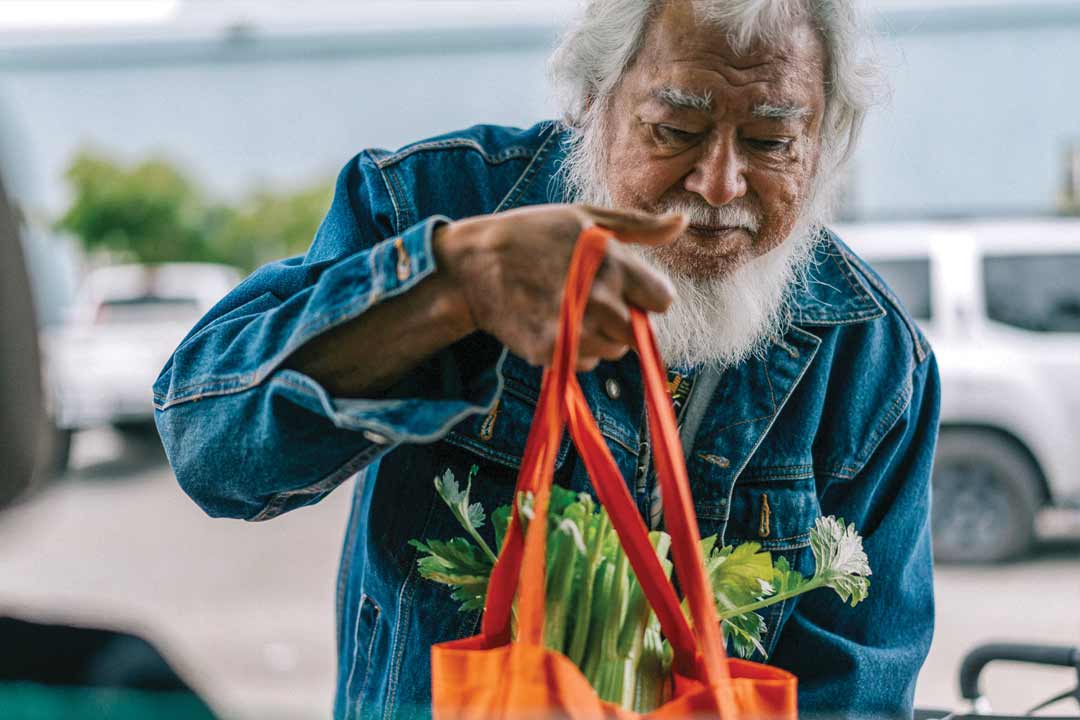
What is Food Insecurity?
Food insecurity is the lack of access to enough food for an active, healthy life. It’s when people don’t have enough to eat and don’t know where their next meal will come from.
Food insecurity manifests in different ways — ranging from concerns about running out of food before there is money to buy more, to the inability to afford a balanced diet, reducing food intake, missing meals altogether, and, in extreme cases, not eating for whole days because of a lack of food and money.
Who Can Experience Food Insecurity?
For some, food insecurity is a temporary challenge. This can be caused by a job loss, an illness or medical expense, or any other unexpected income shock. In Hawaiʻi, many families and individuals find themselves one paycheck away from facing food insecurity.
For others, food insecurity presents a more persistent, ongoing challenge. Key barriers include cost of living, unemployment, insufficient income, lack of access to transportation, health problems and other factors that can prevent adequate access to food.
Food insecurity in Hawai‘i is a complex issue, deeply connected to issues of affordability and equity. Effective solutions will require a profound understanding of the challenges facing communities, innovation, and a cross-sector collaborative approach to succeed.
Effects of Food Insecurity
Taken all together, food insecurity presents complex, long-term challenges linked to many negative health and socioeconomic outcomes, and, with 32% of Hawaii’s households considered food insecure, represents a major problem for the state.
Keiki and Long-Term Development
Food insecurity negatively impacts children at every age.
- Children 3 and younger who experience food insecurity “cannot learn as much, as fast or as well because chronic undernutrition harms their cognitive development during this critical period of rapid brain growth, changing the fundamental neurological architecture of the brain and central nervous system.”
- At older ages, food insecure children are not only more susceptible to becoming sick, but they can also suffer from other additional physical, developmental and cognitive impairments — resulting in lower academic achievement than that of their peers.
Health and Well-Being
Food insecurity presents complex, long-term challenges linked to many negative health and socioeconomic outcomes, and represents a major problem for the state. Food insecure people face:
- Challenges in accessing nutritious foods and face barriers to consistently adopting healthy eating patterns.
- Higher probability of chronic disease.
- Higher rates of mental health issues, including depression, anxiety and sleep disorders.
Health and the Economy
Food insecurity also presents a serious public health problem for the entire community. When extrapolated, these considerations take a serious toll on health care resources and the economy.
- Food insecurity is associated with an additional $1,863 in health care costs annually per food insecure person.
- For Hawaiʻi, at an estimated food insecurity rate of 32%, that translates to $850 million per year in added health care costs.
No One Should Experience Food Insecurity
Whether you need help finding food or are ready to lend help to another member of our ʻohana, we’re here to help connect you.
Elevating Voices in Our Community

The Family That Volunteers Together

Feeding Our Future: Iliana’s Story

Feed Our Fighters, Nourish Our ʻOhana
About Hawaiʻi Foodbank
Nationwide Support and Accountability
Hawaiʻi Foodbank is a certified member of Feeding America – the nation’s largest hunger-relief organization, encompassing a network of 200 food banks across the United States. Certification means Hawaiʻi Foodbank is held to the highest standards for food handling, storage and distribution, financial management, organizational stability, board governance, and more.